Statement against so-called “generative” AI

Anti-Oppression, Heathenry, Paganism, Publications

Since I have a moment this evening, it feels important to add a note to my site on the topic of so-called “generative” artificial “intelligence” or genAI. (I include many quotation marks because these words fail to accurately describe how current AI systems work.)

I am choosing to actively resist AI in these forms. I will not intentionally use it or promote it. My creative ideas, outlines, writing, visual art, etc, are all brought to life the old-fashioned way.

If you couldn’t already tell by my tending of a handful of plants who offer me some food, medicine, and crafting fiber in tiny quantities, or my near-perpetual hand spinning of yarn with a distaff and whorl-weighted spindle, I do not believe technological advancement and speed are inherently superior to older and slower ways of being.

Yes, it’s all nuanced. I’m typing this online, after all. At the same time, AI in its current form is already causing extreme environmental devastation, in addition to many other harms and risks, as discussed in resources like this or this. Many would like AI to seem inevitable and omnipresent, but we can say no, and I’m saying no.

For readers who also find this important, here’s your signal that while I may be slow at times, my art, spiritual ponders, email communications, poetry, academic articles, books, etc, are and will be free from “genAI” to the best of my awareness. (And please tell me if I miss something!)

Items representing the goddess Hel

“Hail Hel” zine now available

Deathwork, Heathenry, Paganism, Publications

A local zine store recently reignited my passion for this DIY art form. The zines I enjoy are often more personal than books or traditional magazines. Less concerned with tidiness and marketability. Zines themselves, regardless of their subject matter, remind me of poems. Sometimes they’re more about a tone, a sense of something, a snapshot in time and emotion, than they are about a structured message. Maybe not everything makes sense, but it doesn’t have to. Maybe it just makes the reader feel something.

From years of private art and hand-scribbled personal and magical journaling, I pulled together my first zine in a long while: Hail Hel. Named for a beloved goddess of death and the daughter of Loki, this zine centers her and her gifts through journal entries about death, collages and scribbles, found objects, confessions, years of dreams and nightmares about the dying and dead, recurrent themes of parents and children, astral travel debriefings, and more. 

Black and white physical copies will soon debut in Chicago, IL. But if you’re looking for a full-color PDF (20 pages) to read right away, check out my sliding scale Gumroad here or below:

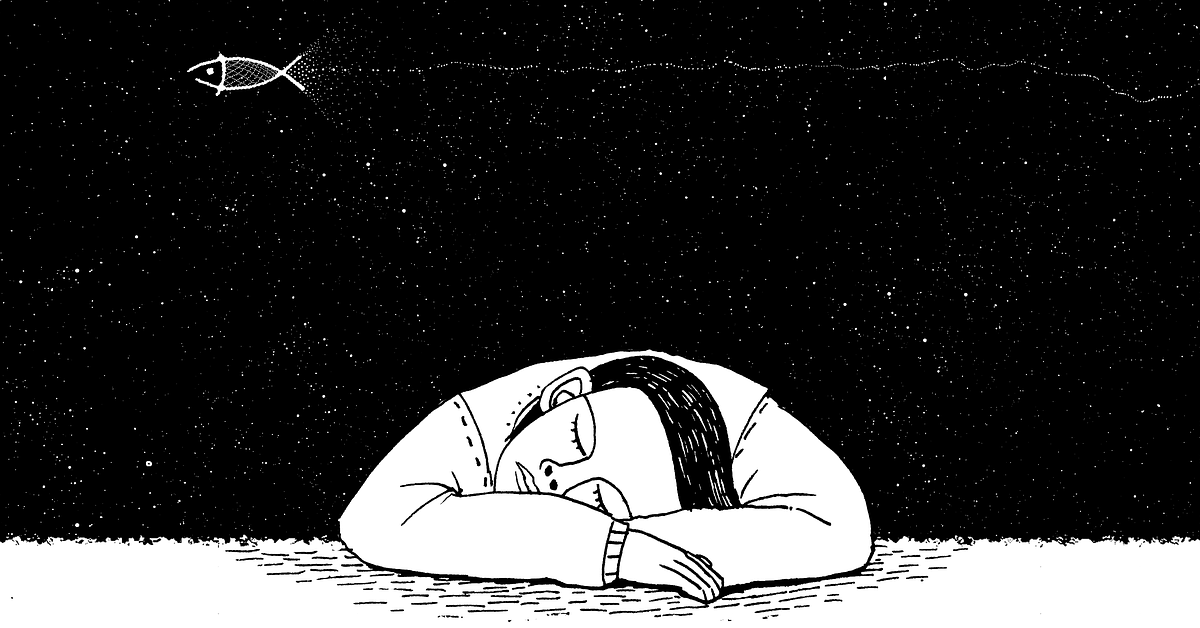
Sleeping dreamer with a fish in the night sky by cdd20 on Pixabay

“Dream Logic – On Narcolepsy and Paganism” column published at The Wild Hunt

Anti-Oppression, Disability, Heathenry, Loki, Paganism

Guest columnist Bat Collazo explores the connections between dreams, disability, and the divine in this column about zir experiences with type one narcolepsy.

I’ve been mulling over this piece for a long time, and it feels good to send it out into the world. Loki, despite recently getting an entire book, also features heavily in this column. Content warning for some discussions of illness and colonization. To read, please visit The Wild Hunt here.

Art of a person with headphones in

Gifts of the Wyrd podcast episode 46: “Loki Devotional Editor Bat Collazo”

Heathenry, Loki, News, Paganism, Publications

After the release of Blood Unbound: A Loki Devotional on April 1, 2021, available for purchase through Troth Publications here, I sat down with Jan Hijatt on the Gifts of the Wyrd podcast to reconnect and discuss on the book’s debut.

We talk about Loki’s place in modern Heathenry, the importance of a book featuring the voices of queer people, background on a comedy play retelling of lore, a new English translation of an old Faroese ballad, how to invite the gods into daily life, and much more!

Bat Collazo joins me to discuss the release on April 1st of Blood Unbound: A Loki Devotional by The Troth publications. Blood Unbound is a collaboration of poetry, rituals, stories, plays, art, and comics submitted by many contributors and edited by Bat. 

We talk about why the book is important today, how it came into being, and about Loki himself.

Listen to episode 46 here.

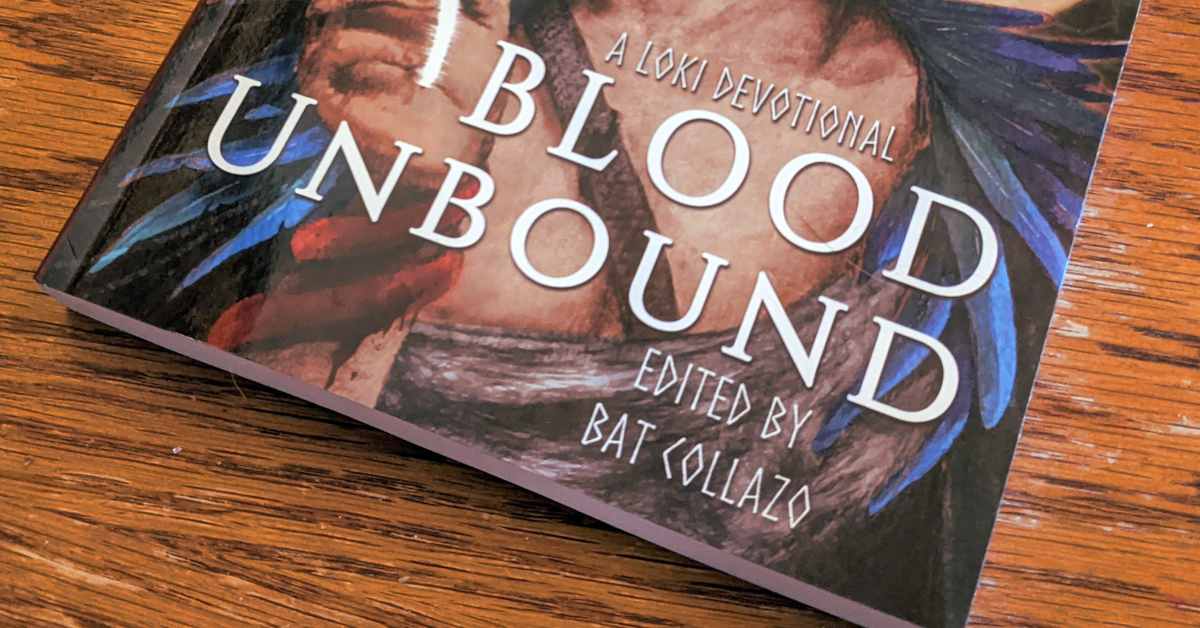
Blood Unbound proof copy on a table

Blood Unbound: A Loki Devotional book launch on April 1, 2021

Heathenry, Loki, News, Paganism, Publications

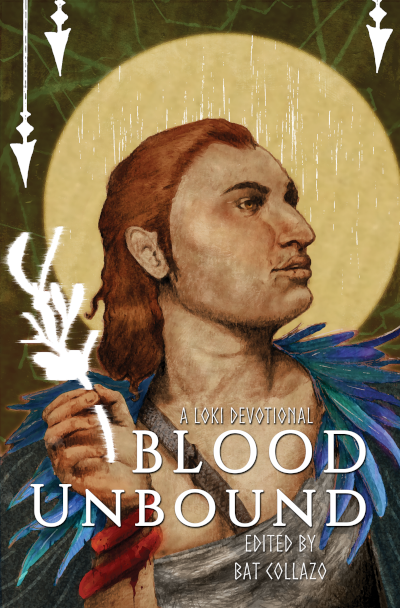
Blood Unbound: A Loki Devotional, edited by Bat Collazo, with cover art by Sae Lokason, and published by The Troth, will be released for sale in e-book and print forms on April Fools’ Day 2021.

The launch date feels fitting: the archetype of the Fool is well-known for cleverness, change, and challenging authority, aspects Loki can also demonstrate in lore and in the lives of his devotees.

Blood Unbound cover art of Loki holding glowing mistletoe

About the book:

Thief and giver of gifts. Liar and revealer of difficult truths. Friend to Thor, blood-brother to Odin, and enemy of the Aesir gods at Ragnarok. Cunning trickster. Loving parent and spouse. Changemaker. The Norse god Loki occupies an ambiguous and controversial position in both modern polytheistic practice and old Scandinavian mythology. He (or they, or she…) disrupts the status quo and crosses borders between worlds and identities, offering a home to those who feel like outsiders. In this book, Bat Collazo and a community of 15 other contributors offer art, poetry, essays, fiction, rituals, and more in devotion to Loki. Whether you know Loki well, or are just beginning your journey, this book offers a path leading closer to this bound and boundless god.

All proceeds from book sales will be donated to In-Reach Heathen Prison Services

On or after April 1, 2021, purchase your copies on the Troth’s Lulu page. For questions or feedback, please contact Bat Collazo here

An outer space picture of Earth

First post, and what is “inclusive Heathenry”?

Admin, Anti-Oppression, Heathenry, Paganism

Hello everyone, I’m Bat! Welcome to my blog. Here you’ll find a wide swath of writing related to pagan spiritualities, inclusive Heathenry, witchcraft, spirit work, urban homesteading, and more. This may include but won’t be limited to poetry, personal narratives, essays, reviews, rituals, spells, instructional guides, and recipes. A few posts you may recognize as revised versions from my previous blog, but the vast majority of content moving forward will be new.

You can find out more about me here.

View some of my recent visual art or purchase prints.

View my list of publications.

View my presentations and classes.

I will, in the near future, offer spiritual services here.

Contact me here.


I often use the phrase “inclusive Heathenry,” but what does it mean?

In a general sense, this phrase means modern worship of Germanic or Northern gods (i.e., Norse) that welcomes people of all races. There is no racial or ethnic requirement for the worship of these gods, this culture is open, and restriction of worship to those of a specific “ancestry” is white supremacist garbage. The idea of Northern Europe being equivalent with whiteness is also nonsense but that’s beyond the scope of this page. Many inclusive Heathen groups also make an attempt to welcome queer people, disabled people, and other people with experiences of oppression.

My use of “inclusive Heathenry” is a cue to others that I support and welcome people of color (I am one!) and people with marginalized identities. To me, my version of inclusive Heathenry also indicates openness in spiritual beliefs in two main ways:

1) Respectful eclecticism is fine by me (i.e., worshipping gods from multiple open or culturally appropriate pantheons, not just Heathen gods). Yes, even pop culture paganism. Yes, even Christopaganism. Go for it, so long as the practices are respectful and appropriate for each.

2) Within the Norse pantheon, I don’t believe in condemning worship of certain gods just because sparse lore may present them as (seemingly) more destructive, chaotic, or “monstrous”. This extends, of course, to Loki, who incites controversy by straddling the line between Aesir and Jotnar, and all of his children, but extends far beyond as well. Just as on “one side” I honor Odin, Frigga, and many others, I also honor Angrboda, Surtr, and many others on the “other side”. I honor the Vanir, too. (“Sides” is oversimplified and too dichotomous.)

The level of time and energy I spend on devotion to each specific god varies based on personal experiences and connections, and evolves over time. But I believe all the Norse gods are complex entities worthy of respect. If someone does not choose or is not chosen to work with specific deities, that’s fine. But ideas of good versus evil need not apply.

There is also a valuable critique to be made that the phrase “inclusive Heathenry” is not a strong enough denouncement of white supremacy within Heathenry: that Heathenry must be explicitly anti-racist. Agreed.

Indeed, while I’ve chosen to use the term for its colloquial simplicity, “inclusion” narratives can also obscure oppressions and/or forced assimilation exerted over marginalized groups that are folded “into” larger structures. Words like diversity and inclusion, while useful in some shared meanings, ultimately say little about how people are treated and what systems of power are in place. Keep this in mind, and keep questioning.